🏠 Housing & Accommodation
Finding Housing as an International Student in the US (2025–2026)
Applying for housing from abroad — without a US credit score, SSN, or local references — is tough. Here's every option and how to navigate each one.
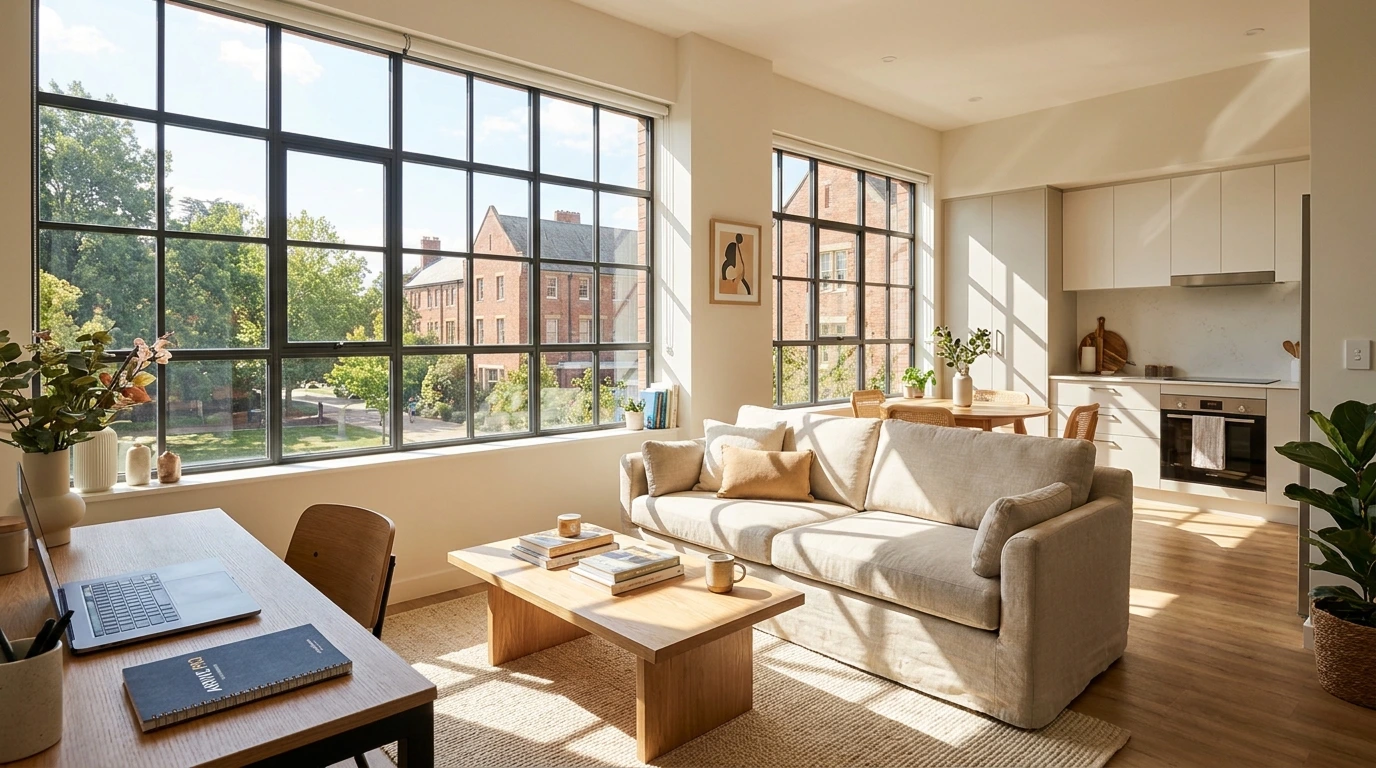
Start early. Apply for on-campus housing as soon as you receive your university acceptance — waitlists fill within days of opening.
On-Campus Housing (Dormitories)
University-managed housing is the most common first-year choice for international students — and the easiest to secure from abroad.
Why it's great for international students
- No credit check or SSN required — billed through your student account
- Furnished with bed, desk, and closet
- Utilities and Wi-Fi included in your housing fee
- Safe, secure, and close to class — no commute costs
- Built-in community of students in the same situation as you
Downsides to know
- Often more expensive per month than off-campus equivalents
- Limited privacy — shared bathrooms, common kitchens
- Strict guest and noise policies
- May not be available for graduate or upper-year students
How to apply
- Log into your university student portal and find the Housing or Residential Life office
- Submit a housing application the day it opens — don't wait
- Pay the housing deposit ($200–$500, credited to your first semester)
- Complete the roommate preference survey — be specific about sleep schedule and study habits
- Confirm your assignment 2–4 months before arrival and message your roommate
International student tip: Email the housing office explaining you're arriving from abroad. Many universities allow international students to move in 1–2 days earlier than general move-in day.
Off-Campus Housing
Off-campus is often cheaper and more private. The tradeoff is more legwork upfront.
Types of off-campus housing
- Shared apartment — rent a room in a multi-bedroom unit. Most common for students. Average $600–$1,200/room depending on city.
- Studio apartment — private space, more expensive. Common for funded grad students.
- University-affiliated apartments — some universities partner with nearby complexes for student discounts and flexible leases.
- Homestay — live with a local family. Meals sometimes included. Great for immersion.
- Short-term furnished rental — use Furnished Finder or Blueground for 1–3 months while you find a long-term place.
Where to search
- University off-campus housing boards — vetted listings near campus
- Zillow, Apartments.com, Rent.com — mainstream US rental sites
- Facebook Groups — "[Your University] Housing" groups have active sublet posts from students
- Furnished Finder — furnished month-to-month rentals
- Roomies.com — room-only listings for finding roommates
Signing a Lease Without a US Credit History
This is the single biggest challenge. US landlords typically require a credit check, SSN, and sometimes a co-signer. Workarounds:
- Pay extra months upfront. Offer 2–3 months' rent in advance. Significantly reassures landlords.
- Use international student leasing services. Leap, CORT, and Yugo specialize in leases for international students with no US credit.
- Use a guarantor service. TheGuarantors or Obligo act as a digital co-signer for a small monthly fee ($15–$40), replacing the personal co-signer requirement.
- Provide financial proof. Bank statements, scholarship letters, or a university funding confirmation letter can substitute for credit history with many landlords.
- Get a co-signer. A US-based contact (professor, family friend) who agrees to be legally responsible if you don't pay.
Avoiding Rental Scams
International students are disproportionately targeted because scammers know you're searching from abroad and can't visit in person.
Red flags
- Price is significantly below market for the area
- Landlord is "overseas" and can't show the unit in person
- Asked to pay via Zelle, Venmo, wire transfer, or gift cards before signing a lease
- Landlord pressures you to "act now or lose it"
- Photos reverse-image-search to another listing or stock photo
- Verify the landlord owns the property — look up the address on your county's tax assessor website
- Never send money before signing a lease and receiving keys
- Ask a trusted US contact to visit in person, or do a live video tour with the landlord
- Pay by check or ACH bank transfer — never wire or gift cards
Monthly Rent by City (2026 Estimates)
| City | Shared Room | 1-Bedroom | Cost Level |
|---|---|---|---|
| New York City | $1,200–$2,000 | $2,800–$4,500 | Very High |
| San Francisco / Bay Area | $1,100–$1,800 | $2,500–$4,000 | Very High |
| Boston | $900–$1,500 | $2,200–$3,500 | High |
| Chicago | $700–$1,100 | $1,500–$2,500 | Medium |
| Austin | $700–$1,000 | $1,400–$2,200 | Medium |
| Pittsburgh / Columbus | $450–$750 | $900–$1,500 | Low |
Frequently Asked Questions
Should I choose on-campus or off-campus housing for my first year?
On-campus for your first year, almost always. It requires no credit history, is simpler to arrange from abroad, and gives you a built-in community while you're still learning how things work in the US. Switch off-campus in year two once you have US banking and credit established.
Can I secure housing before arriving in the US?
Yes. On-campus housing is entirely online and safe. For off-campus, use services like Leap or Yugo that specialize in pre-arrival international student leases, or have a trusted US contact verify the listing and landlord before you send any money.
What documents do landlords typically ask for?
Passport (government ID), proof of enrollment (I-20 or admission letter), proof of financial support (bank statement, scholarship or assistantship letter), and sometimes a reference from a professor or previous landlord.
Will I get my security deposit back?
In most US states, landlords must return the deposit within 14–30 days of move-out, minus legitimate damage charges. Take timestamped photos and video of every room on move-in day to protect yourself.
 Arrive