Health care in the United States is expensive — a single emergency room visit can cost thousands of dollars without insurance. Understanding your options before you arrive is essential.
Quick Answer
Most universities require international students to have health insurance. Start with your school's student health plan — it's usually the easiest option.
University Student Health Plans (SHIP)
The most convenient path for F-1 and J-1 students, often integrated directly with your tuition.
Cost & Billing
Typical cost is $1,500–$3,500/year. Automatically billed with tuition for ultimate convenience.
Comprehensive
Covers mental health, prescriptions, and emergency care. On-campus clinic visits often have no extra cost.
Waiver Options
You can waive it by showing your own equivalent coverage if it meets university standards.
ACA Marketplace Plans
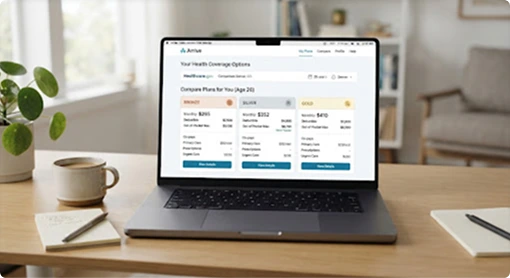
F-1/J-1 visa holders can purchase insurance through Healthcare.gov. These plans offer comprehensive coverage and might be more affordable depending on your needs.
Open Enrollment: Nov 1 – Jan 15
Typical cost: $100–$400/month
No subsidies — F-1/J-1 NRAs are not eligible for ACA premium tax credits
Choose the network structure that fits your lifestyle.
Plan Type
Premium
Out-of-Pocket
Best For
HMO
Lower
Lower
Predictable costs with a primary care doctor
PPO
Higher
Higher
Freedom to see any doctor without referrals
HDHP
Lowest
Highest
Healthy students who rarely need care; pairs with HSAs
Key Insurance Terms
Master the vocabulary of the US healthcare system to avoid surprise bills.
Premium
Monthly payment for your insurance — due whether you use it or not.
Deductible
Amount you pay out-of-pocket before insurance starts covering costs.
Copay
Fixed amount you pay per visit (e.g., $25 for a primary care visit).
Out-of-Pocket Max
After hitting this, insurance covers 100%.
In-Network
Doctors/hospitals that have contracts with your insurer — always cheaper.
Referral
Permission from a doctor before you can see a specialist. Not required in PPOs.
Specialized Care
Mental Health Coverage
ACA-compliant plans must cover mental health services equally with physical health. This includes therapy sessions and psychiatric care.
988 Suicide & Crisis Lifeline
Available 24/7 across the US — always free and confidential.
Dental & Vision
Usually not covered by standard plans. Consider separate plans from Delta Dental or VSP for ~$15–$30/month. Tip: Check your campus dental school for major discounts.
How to Use Your Insurance
1
Carry Your Card
Keep your physical or digital insurance card with you at all times for quick identification.
2
Check In-Network
Always verify a doctor is in your insurer's network before booking to save significantly.
3
Start on Campus
For non-emergencies, visit the campus health center first — it's often free or low-cost.
4
Urgent Care
For non-life-threatening but urgent issues, use an urgent care clinic instead of the ER.
5
ER for Emergencies
Only go to the Emergency Room for true life-threatening emergencies as it is very expensive.
6
Verify Your EOB
After a visit, check your Explanation of Benefits (EOB) carefully to verify all charges.
Frequently Asked Questions
Can I use my home country's insurance in the US?
Generally no — most foreign plans don't cover US medical bills, or only offer very limited emergency coverage. You need a US-based plan to meet university requirements and avoid massive bills.
What if I can't afford insurance?
Contact your university's financial aid office — many schools offer hardship waivers or subsidized SHIP plans. Note: F-1 and J-1 visa holders are not eligible for Medicaid — applying could create a public charge record that affects future immigration applications.
Is insurance required for F-1 students?
Most universities mandate health insurance for F-1 students as a condition of enrollment. J-1 visa holders are federally required to maintain coverage meeting specific minimum standards.
Navigate the US with Confidence
Arrive gives you step-by-step guidance tailored to your university, visa type, and home country — all in one free app.


 Arrive